Come see us at VISION in Stuttgart on October 6-8! See our events page to schedule a meeting.


We’re back with another demo! Previously, we explored how Ubicept Photon Fusion (UPF) improves high-frame-rate CMOS imaging and how those improvements can translate into better downstream perception for AR/VR applications:
Since then, we’ve worked with a number of automotive companies interested in our technology. They understand the potential of next-generation SPAD sensors, but also wanted to see how we could help them with the current-generation CMOS sensors that they’re already using.
The results of these projects have been quite promising, but of course, we can’t post them here because they’re from confidential customer projects. So, we decided to capture some footage ourselves!
For this test, we used an Allied Vision Alvium 1800 U-510c featuring a Sony Pregius S sensor. It provides a great combination of high sensitivity, global shutter, high frame rate, and easy access to raw sensor data—all of which are important for processing with Ubicept Photon Fusion.
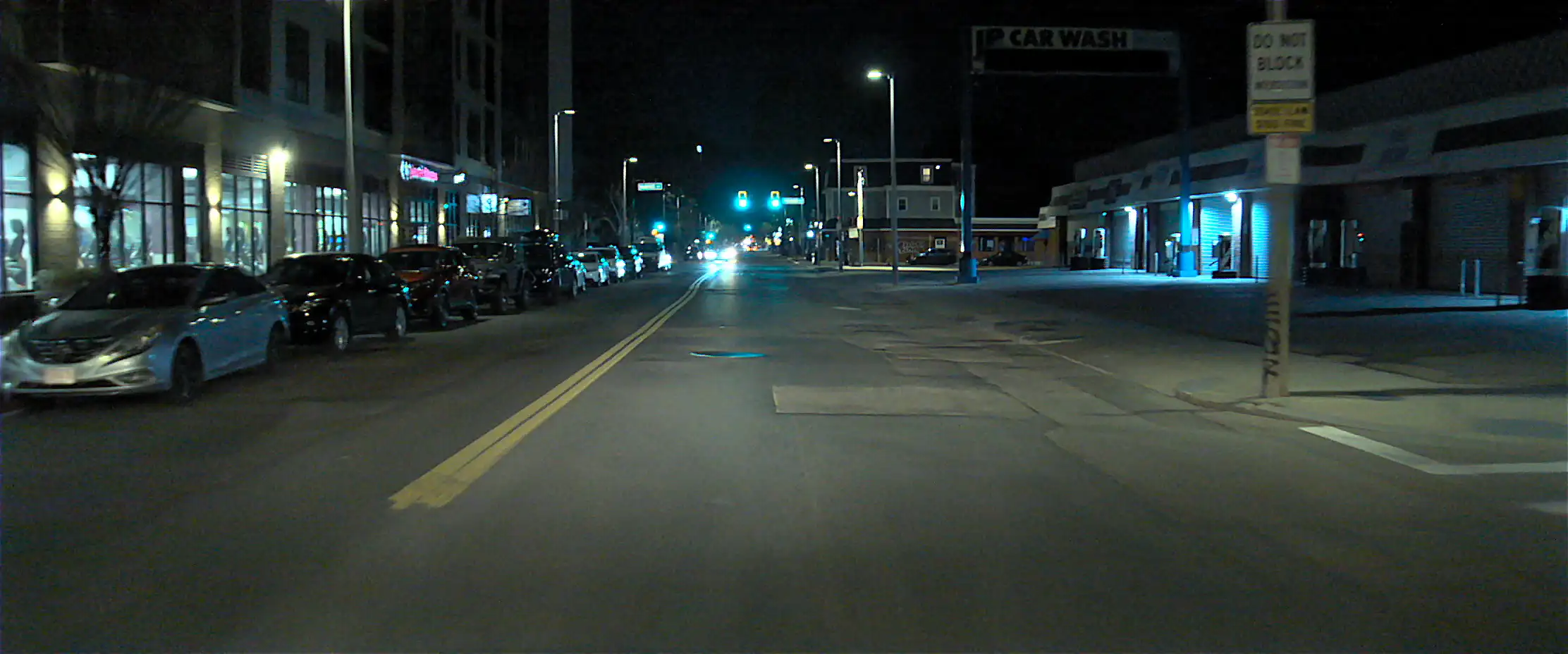
Let’s start by comparing a conventional 1/30s exposure to our result:

We can also zoom into the sign to observe what happens when we change exposure times:

The first three images illustrate the classic noise-blur tradeoff: increasing the exposure to 1/15s reduces noise but increases motion blur, while decreasing it to 1/120s reduces motion blur but increases noise. Here, Ubicept Photon Fusion reconstructs a single frame from a burst of short exposures, preserving the sharpness of the 1/120s exposure while significantly reducing noise.
Of course, there are still limits to how far conventional CMOS sensors can be pushed. Freezing motion even more aggressively would require progressively shorter exposures, eventually reaching a point where read noise completely dominates the captured signal.
This is one of the reasons that SPAD sensors, which do not suffer from read noise, are so compelling for these applications. Still, as these examples demonstrate, there is already substantial room to improve low-light automotive imaging using today’s CMOS sensors.
You can see these results and more in the following video:
Prefer to pixel-peep? Check some additional still frames below:
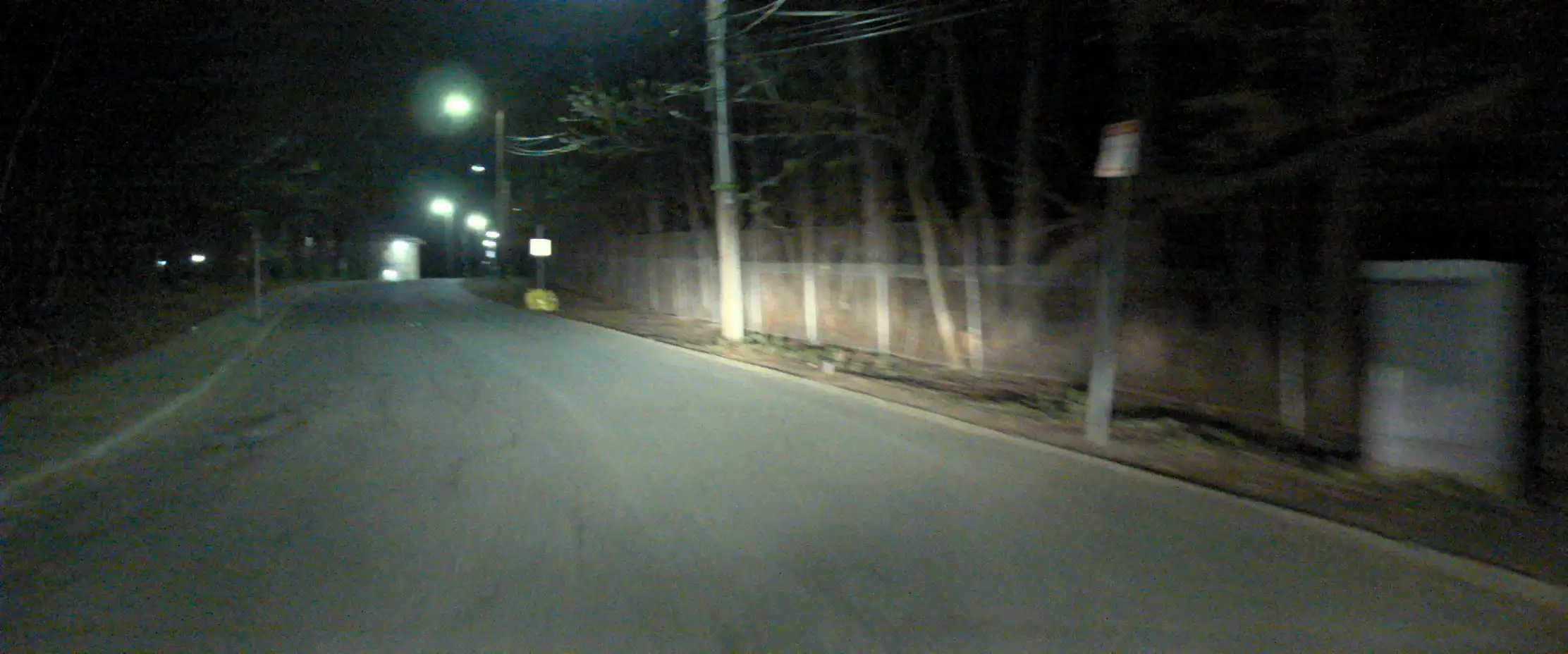
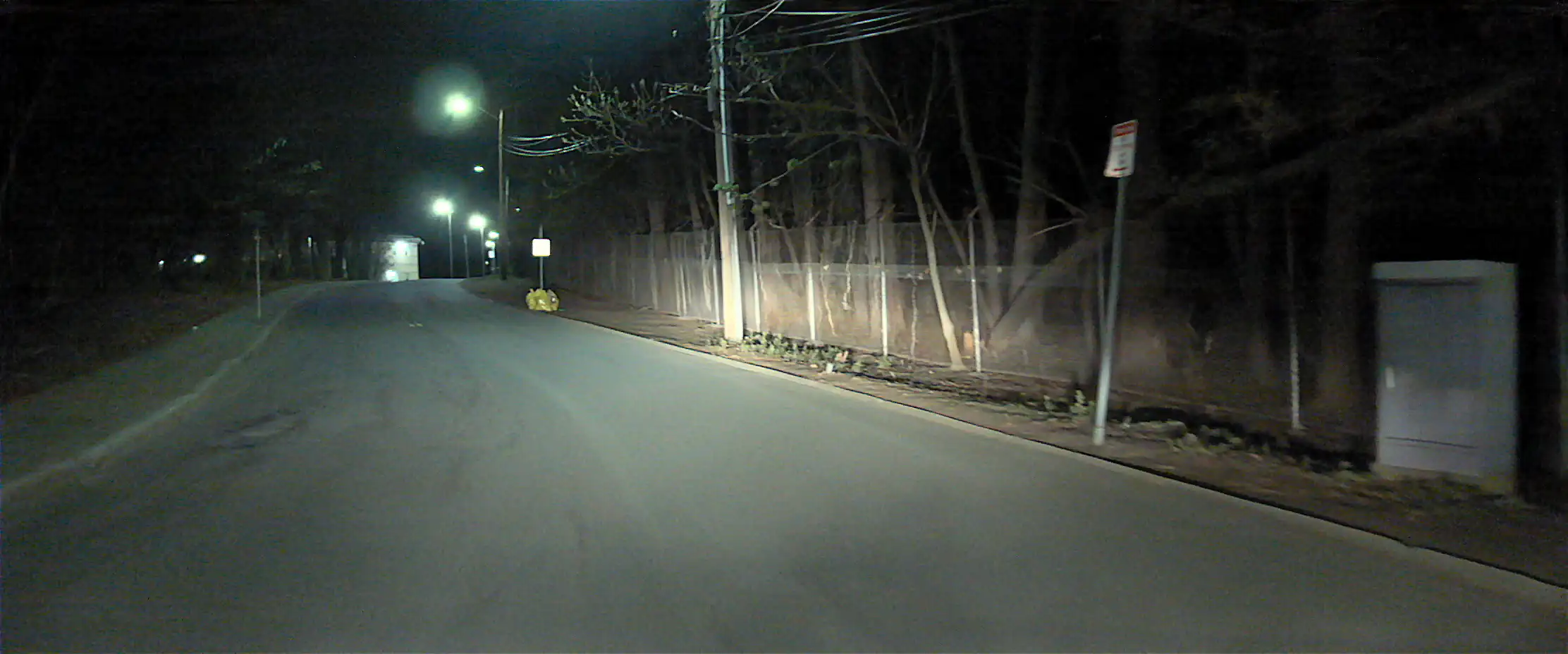
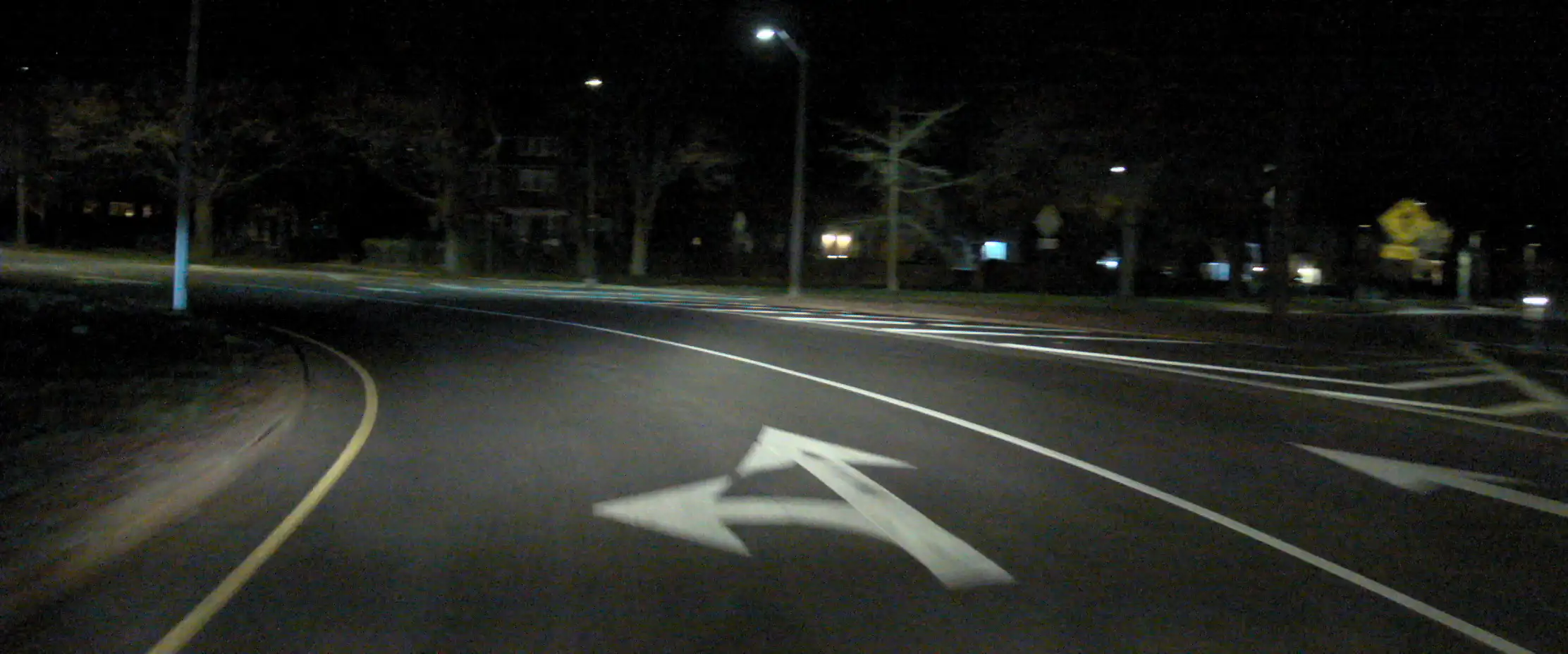
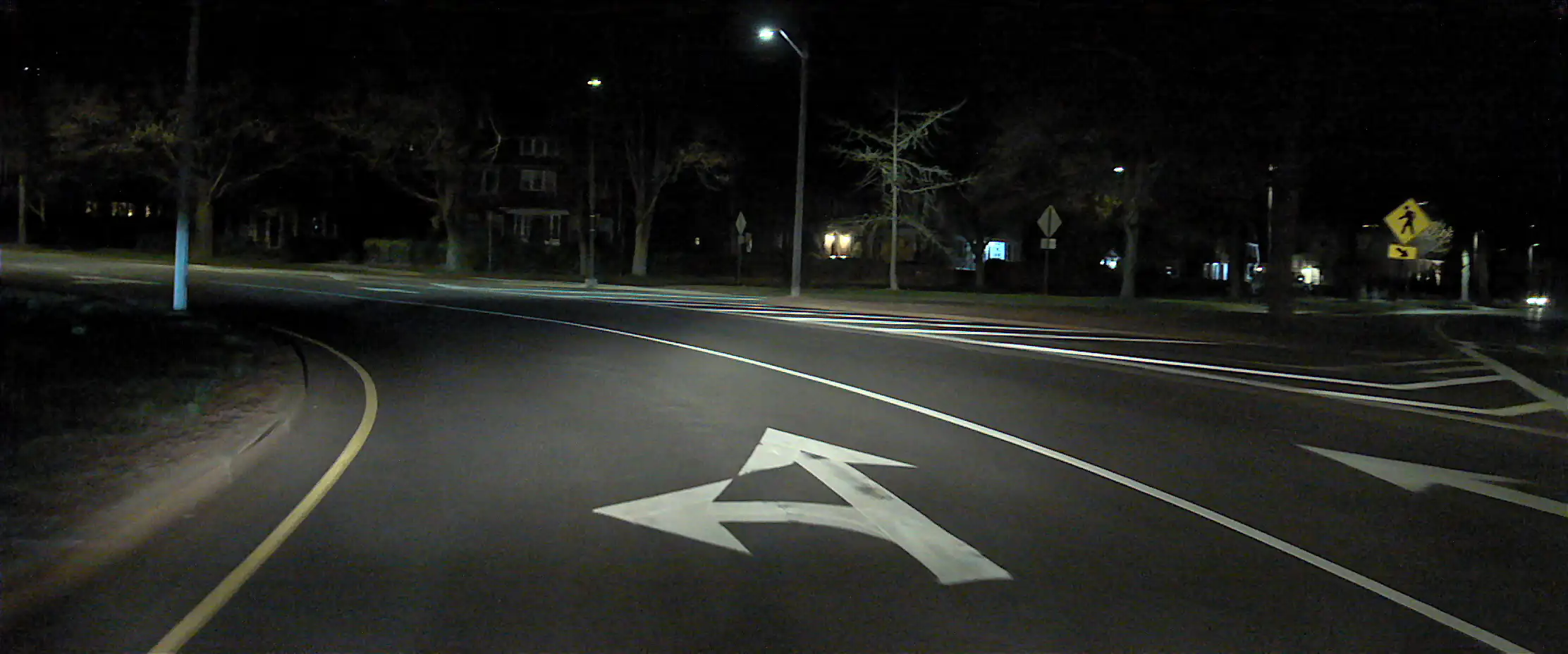

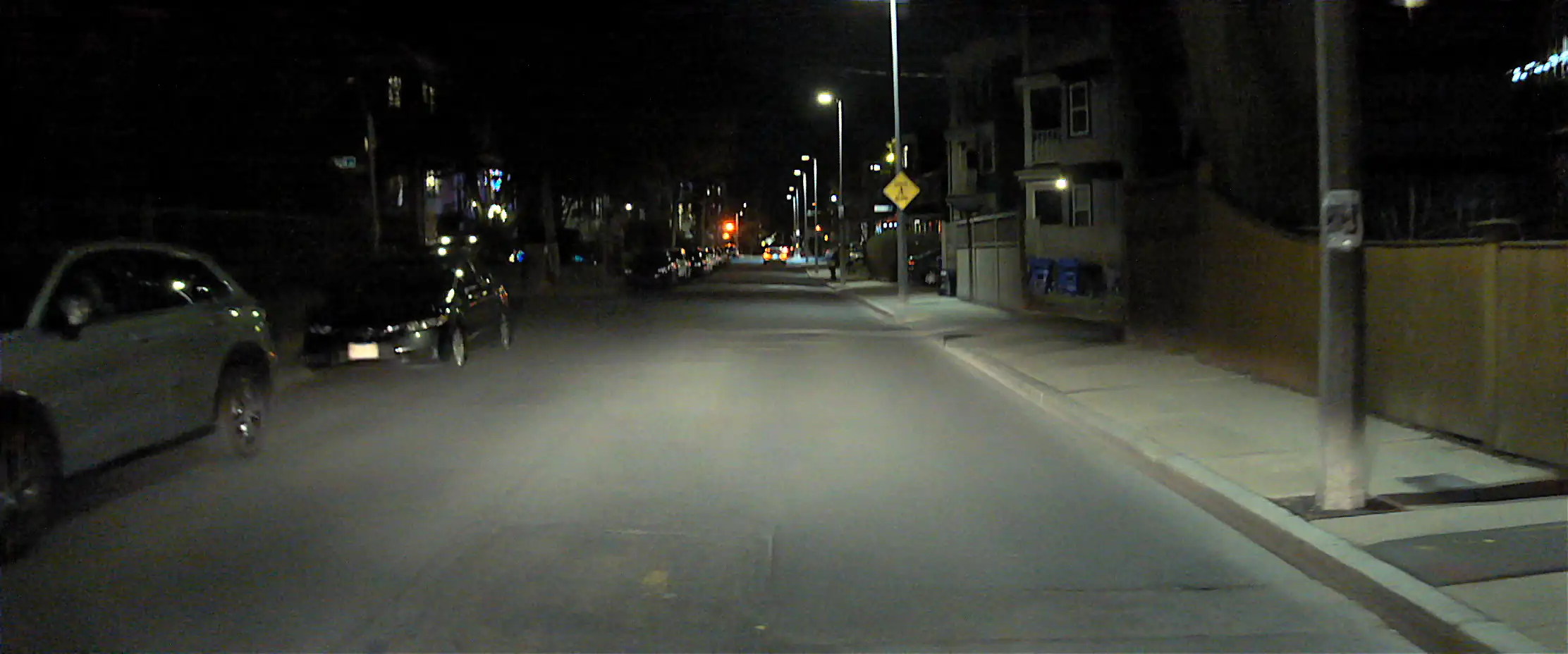
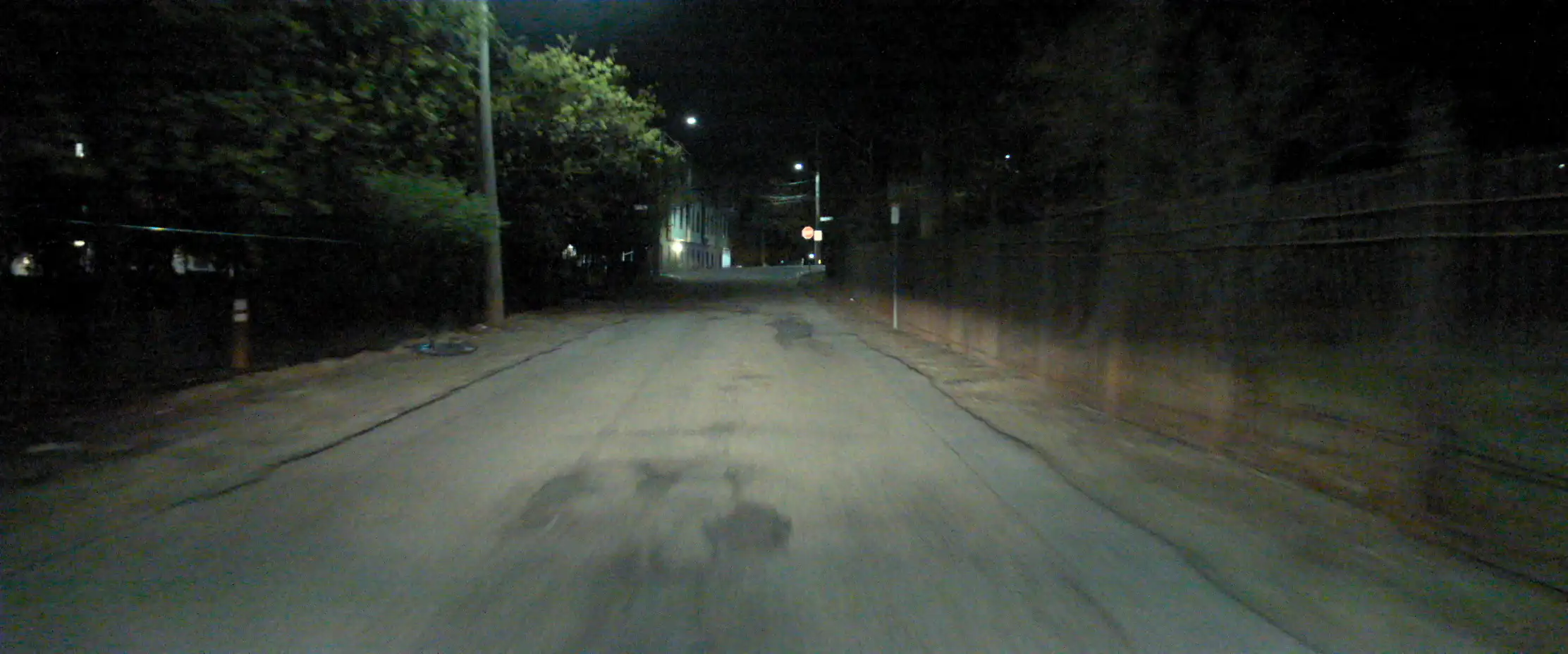
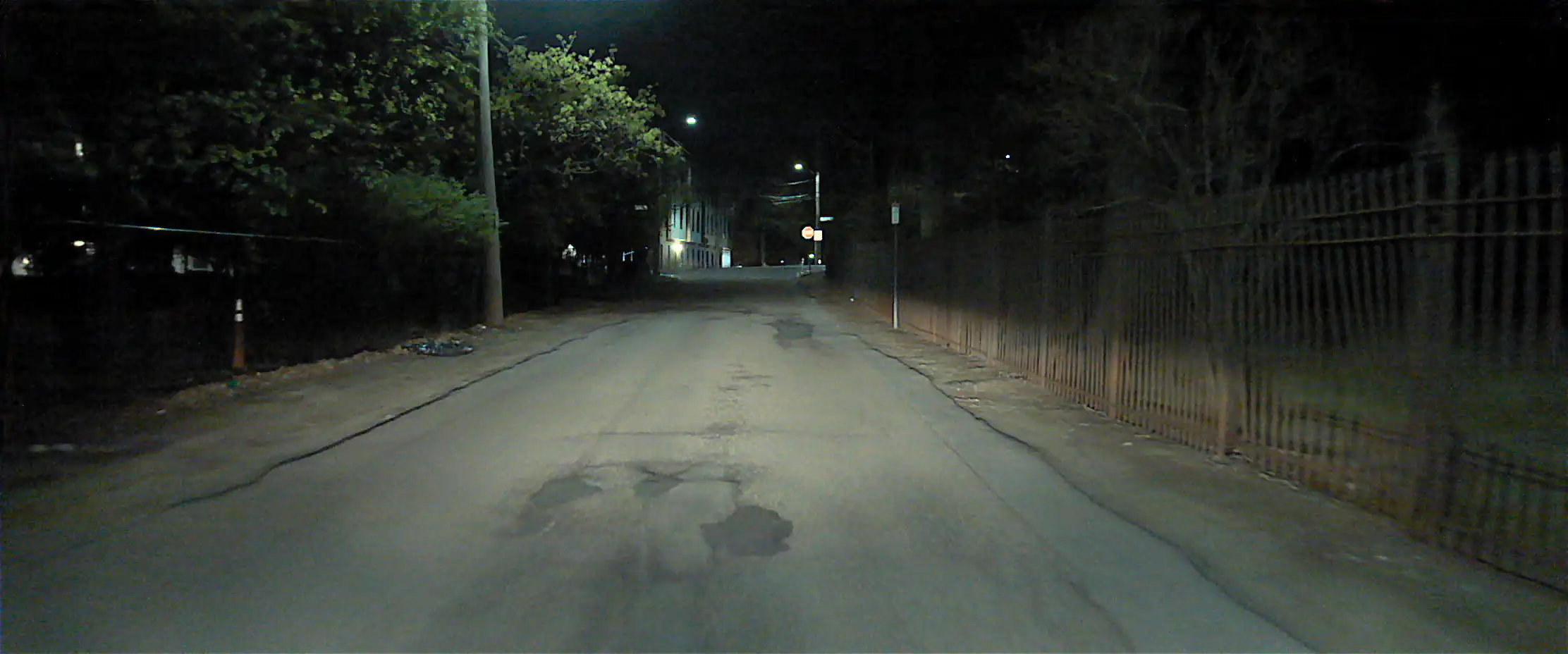
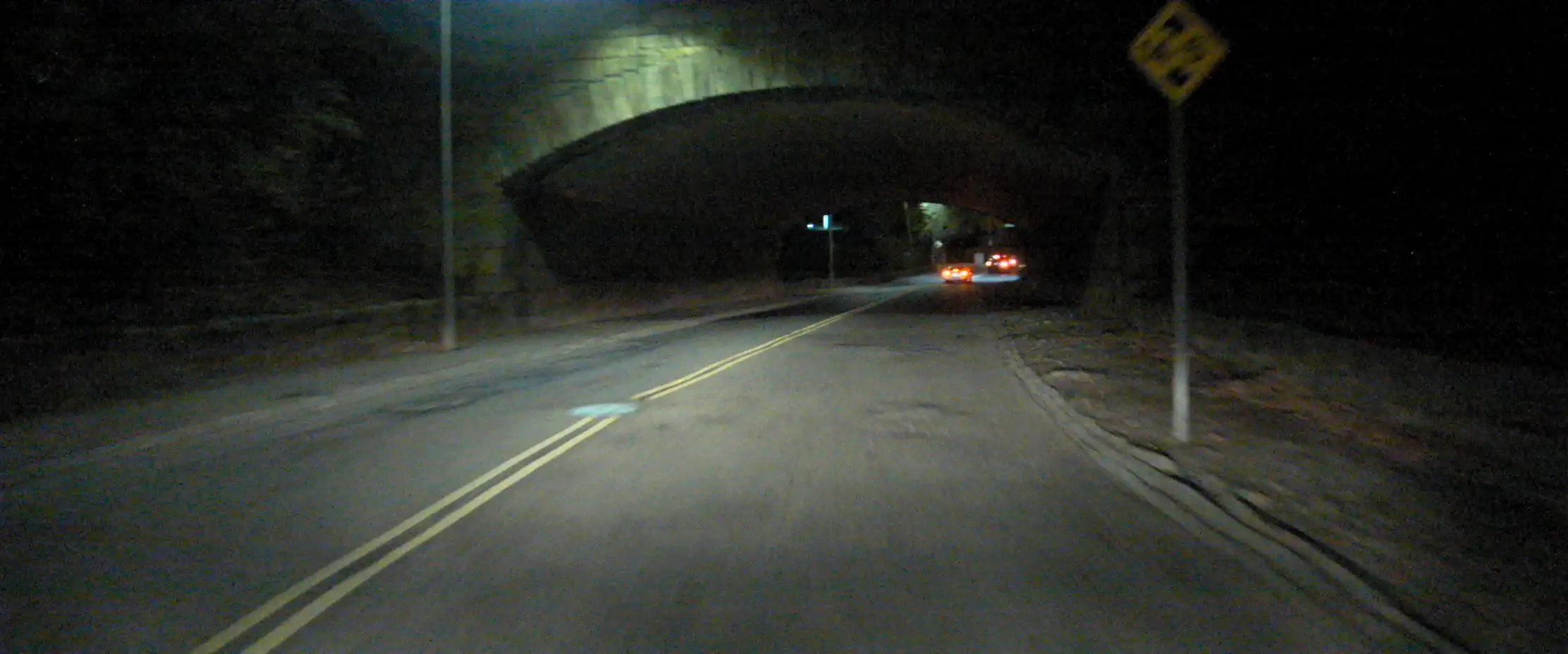
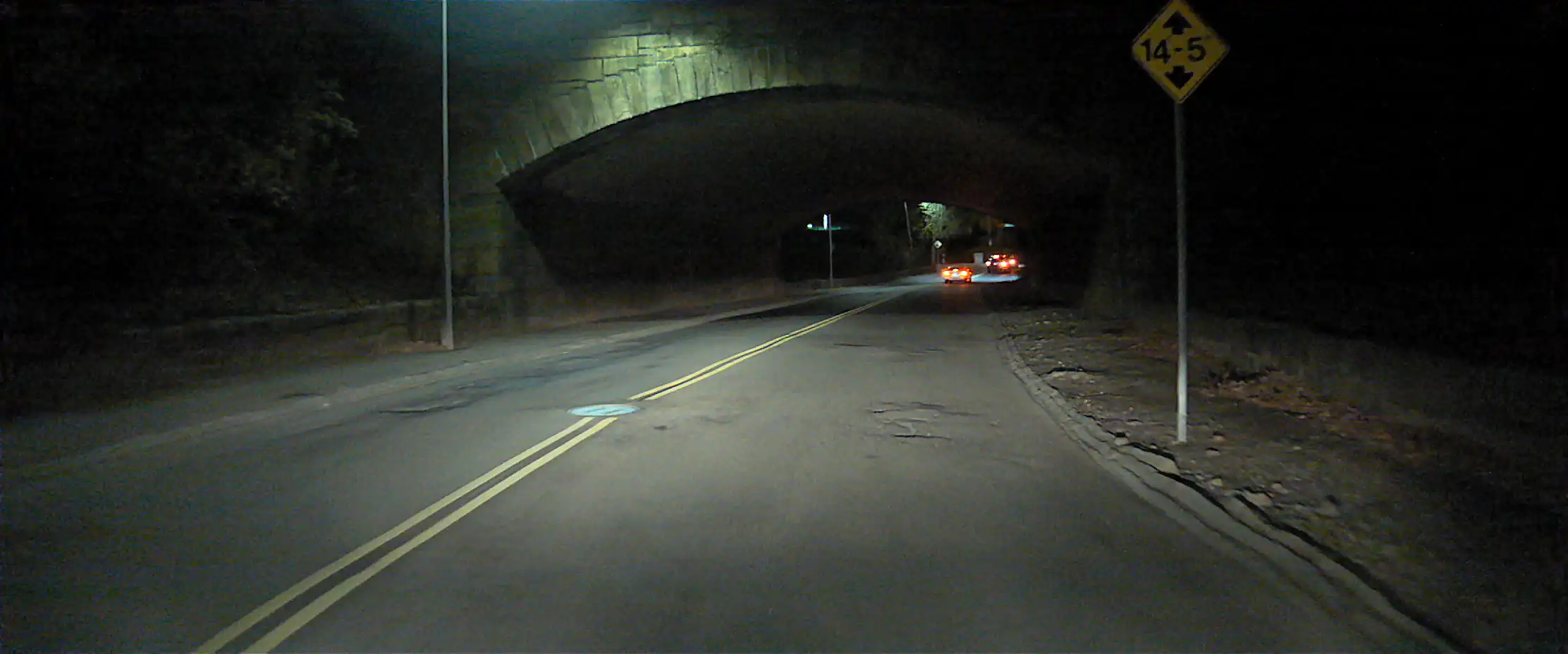
Last but not least: you may recognize these roads from our earlier post about Pushing the Limits of HDR with Ubicept. It's hard to compare the results directly since the footage was captured many months apart, but you may still wish to reference it to see how a low-light CMOS camera optimized for Ubicept Photon Fusion (this post) stacks up against a modern dash camera with in-sensor HDR and a full SPAD imaging system running Ubicept Photon Fusion (that post).
If you’re interested in learning how Ubicept Photon Fusion can benefit your use case, please check out the Ubicept Toolkit, now available for both CMOS and SPAD cameras.