Low Light Isn’t Just About Lighting
Executive summary
In machine vision, small apertures and short exposures are often used to keep details in focus and freeze motion. These settings can leave sensors short of light, even when the scene looks bright to us. SPAD cameras with Ubicept Photon Fusion can reveal details that conventional cameras miss.
Introduction
We spend a lot of time at trade shows talking to people about the versatility of SPAD imaging, and one question that sometimes comes up is: “aren’t they mostly useful when it’s dark?”
It’s a very understandable question, especially since many of our demos feature outdoor scenes at night. Dark surroundings, however, aren’t the only reason a camera might be short of light. Sometimes, the settings needed to capture useful images can severely limit how much light reaches the sensor.
In this blog post, we’ll explore (1) how those limits arise in practical imaging scenarios and (2) how SPAD sensors combined with Ubicept Photon Fusion can help when this happens.
A closer look at low light
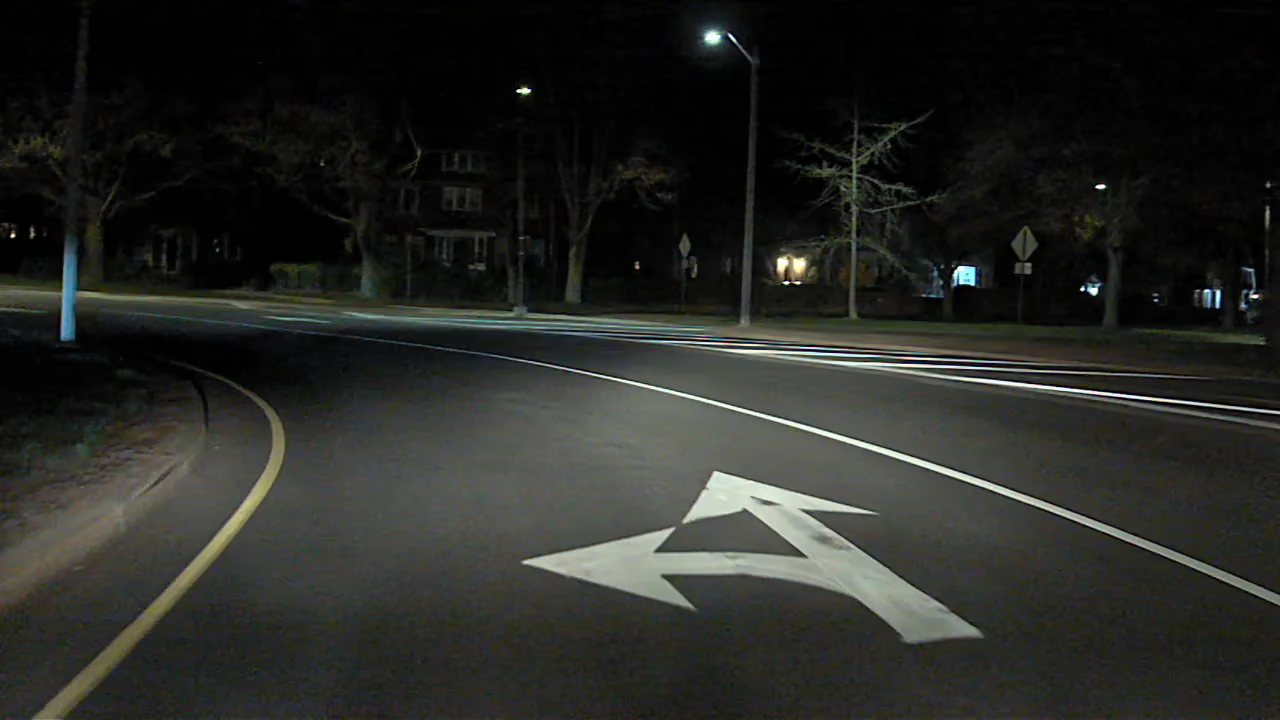
Let’s set the stage with a conventional CMOS image from one of our recent blog posts:
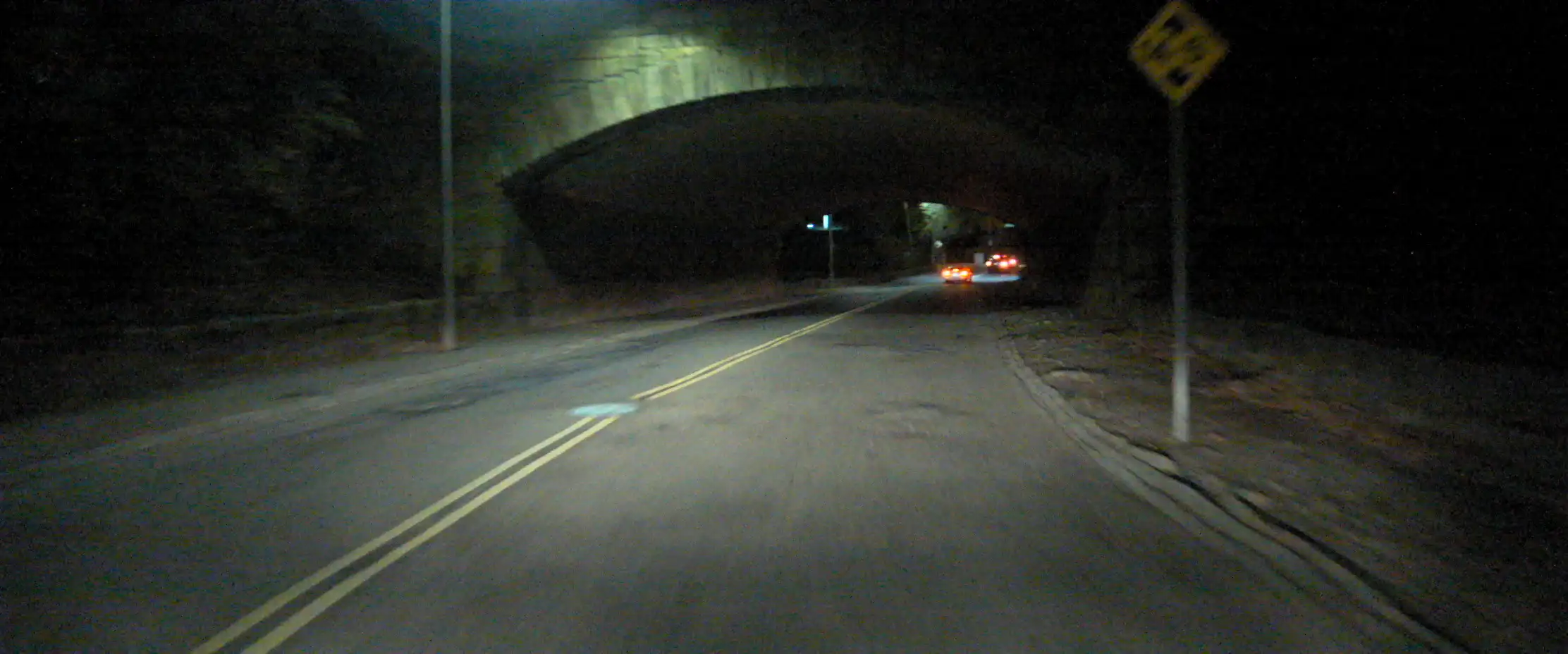
This scene certainly qualifies as dark, but other aspects of the setup were actually quite favorable for collecting light:
- With subjects this far away, the wide-angle lens provided plenty of depth of field even at its widest aperture setting of ƒ/1.8.
- The road was straight and the car wasn’t moving very quickly, so we didn’t get much motion blur even with a longer 1/30 s exposure.
But some applications are much less forgiving. In industrial inspection, for example, it’s often necessary to use longer lenses to magnify small details while keeping the camera clear of moving objects or machinery. Keeping those details in focus can require much smaller apertures, and because small movements cover more pixels, shorter exposures are needed to limit motion blur. Together, those settings can drastically reduce the amount of light reaching the sensor during each exposure.
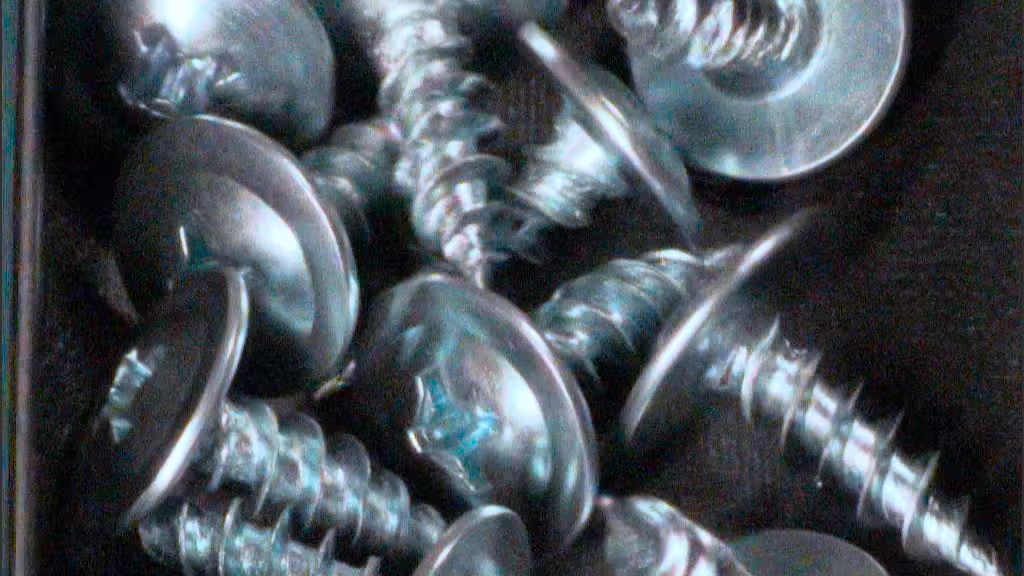
Now, let’s compare a roadside shot of a passing car at night with a close-up of screws on a vibrating track. Both frames below were captured with the same conventional CMOS camera as before, this time fitted with a 50 mm lens:
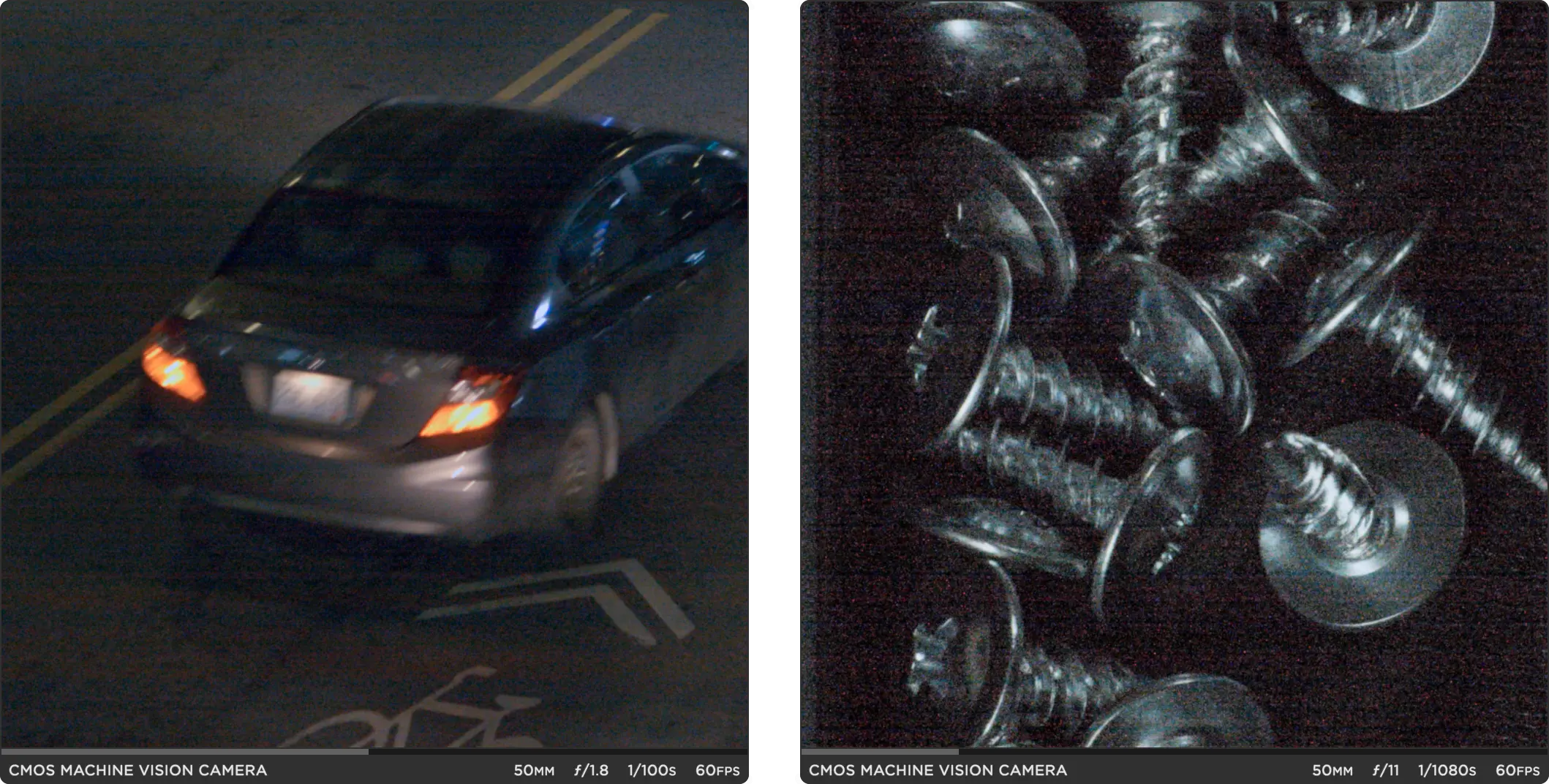
In the image on the left, the wide ƒ/1.8 aperture limited depth of field, but there was still enough at this distance to keep both the car and street in focus. It also helped keep noise under control even with only about 5 lux on the street (from the streetlights) and 50 lux on the license plate (from the light directly above it). Motion was more of a challenge, with the 1/100 s exposure still too long to capture a legible image of the plate.
The image on the right is noticeably noisier, and the settings help explain why. Freezing the motion of the screws required a 1/1080 s exposure, cutting light collection by about 11× compared to the car shot. Keeping the screws in focus at close range also required an ƒ/11 aperture, cutting light collection by another 37×. That’s a combined reduction of about 400×.
The obvious response is to add more light—and we did! The screws were illuminated at 1,050 lux, which is 21× the illumination of the license plate and 210× that of the street. That’s quite bright by residential and office lighting standards, but the camera settings made it “low light” from the perspective of the sensor.
What SPADs with Ubicept enable
SPAD sensors with Ubicept Photon Fusion (UPF) can help in both of these cases. Here are those same moments captured with our evaluation kit using identical lenses and apertures:
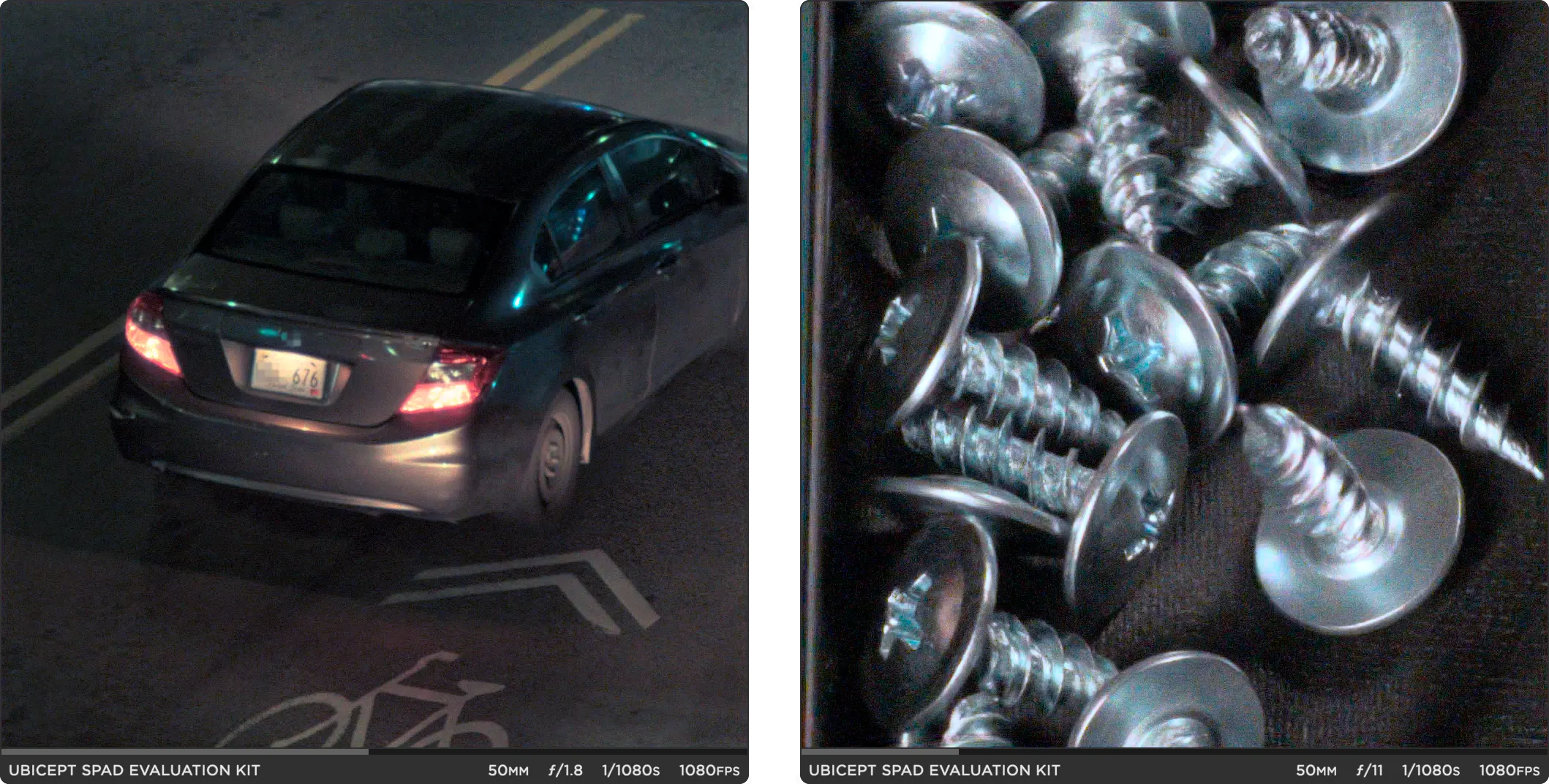
The license plate number is clear enough that we had to redact half of it, and the reduced noise makes the edges and textures of the screws much easier to see. The video below shows both scenes in motion, along with several more examples:
For every clip except the opening car scene, we chose conventional camera settings to limit motion blur and provide sufficient depth of field. The same aperture settings were used on both cameras.
How much light does the sensor collect?
Let’s see how all the illumination levels and camera settings compare:

We’ve also included exposure value (EV), which combines aperture and exposure time into one number. For example, ƒ/2.8 at 1/250 s, ƒ/4 at 1/125 s, and ƒ/16 at 1/8 s all correspond to approximately EV 11. This lets us plot the exposure settings against illumination for all six clips:
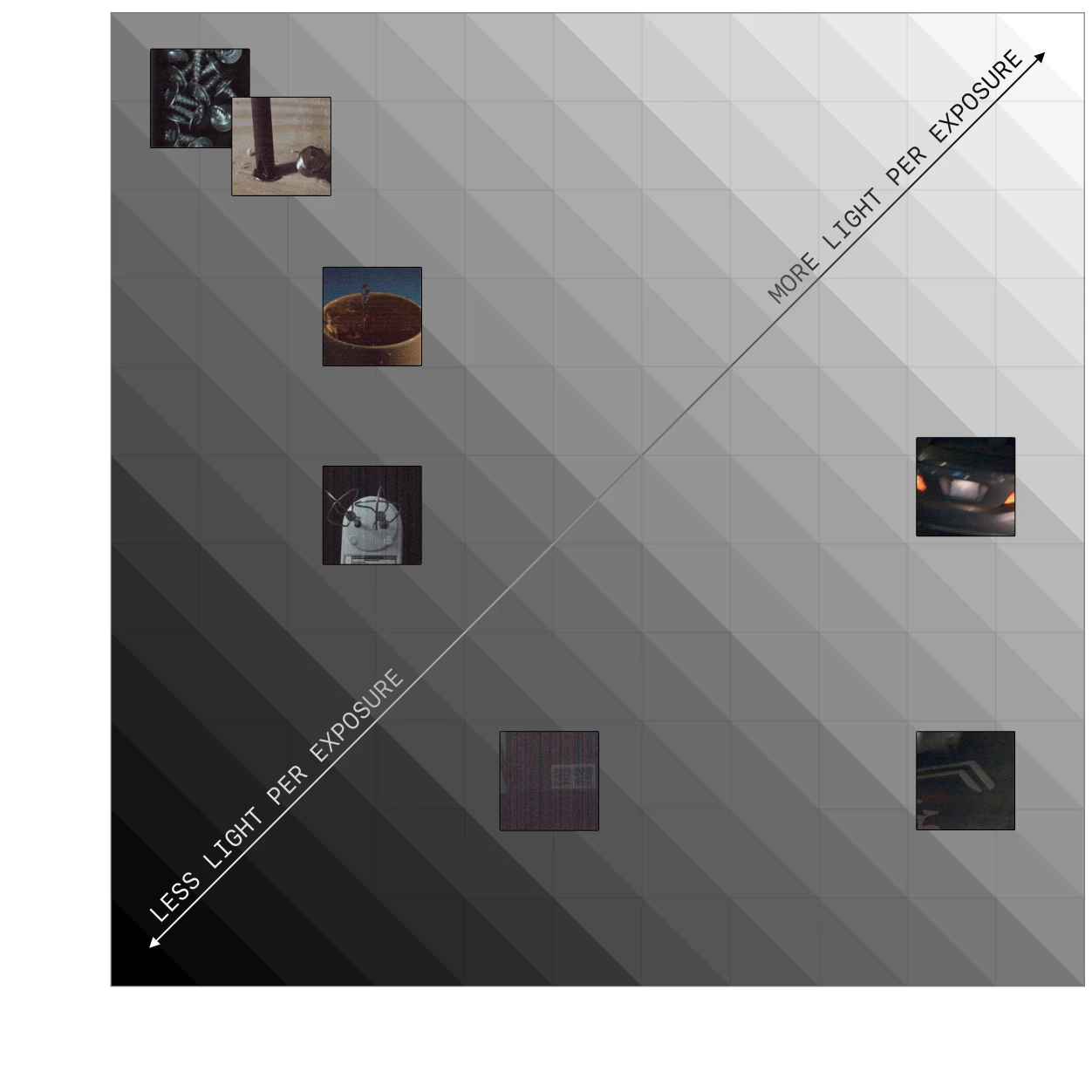
The diagonal bands show how illumination and exposure settings can offset each other. For example, doubling the illumination from 50 to 100 lux would double the amount of light collected per exposure. Increasing EV from 10 to 11 at the same time (by stopping down the aperture or shortening the exposure time) would offset that gain, so the two points would fall in the same band. Each step toward a lighter band represents twice as much light per exposure under otherwise identical conditions.
The license plate stands out in this comparison. It was illuminated at only 50 lux, but with the camera set to ƒ/1.8 and 1/100 s (EV 8.3), the sensor would collect at least 15 times (a little less than four bands) as much light per exposure as it would from an equally reflective surface in any of the other clips. That helps explain why noise is relatively well controlled in the conventional image even though motion blur makes the plate unreadable.
Conclusion
It’s easy to associate low-light performance with dark surroundings, but a camera gets only as much light as its exposure time and aperture allow. Once those settings are adjusted to freeze motion and/or provide sufficient depth of field, even a scene we perceive as brightly lit can leave the sensor short of photons.
The benefits of SPAD imaging with Ubicept Photon Fusion extend to these conditions too. While our night demos make the improvements easy to recognize, the brighter scenes here show that the same technology can help when the necessary exposure settings prevent a conventional camera from making full use of the available light.